
Robot Operating System (ROS) Software Stack
The Robot Operating System (ROS) is a popular open-source software framework for building robotic applications. It provides a structured communications layer on top of the host operating system, with tools and libraries for simplifying the complex task of creating robot behavior across various robotic platforms. ROS enables code reusability and makes it easier to integrate different capabilities and share solutions. ROS Robotics Software Stack Overview ROS consists of a number of components that work together to enable robotic development. The core ROS components include the communications infrastructure, robot-specific tools and capabilities, and developer tools. The communications infrastructure allows processes to communicate with each other, passing messages for tasks like sensor data processing, control, and actuator commands.
Read article →
Overview of blockchain Layer 2 solutions and pricing
What is Layer 2 Hey there! Let me tell you about Layer 2 in a super simple way. Layer 2 solutions are like a smart shortcut for blockchain networks. You know how sometimes the main roads get really congested and slow? Well, Layer 2 is like a side street that helps speed things up! The main benefit of Layer 2 is that it allows for way more transactions to happen at once, without getting stuck in traffic jams. It’s like having a express lane that lets you zoom past the gridlock. And the best part? The fees for using these Layer 2 shortcuts are much lower than the main road. Saving money is always a win!
Read article →
KYC Providers and pricing - which one to choose
KYC Providers Review: Top 10 KYC Projects Hey there! Let’s talk about KYC (Know Your Customer) providers and what the top dogs are in this space. First off, KYC is super important for any business dealing with money, especially in crypto and finance. It helps verify the identities of customers to prevent fraud, money laundering, and other nasty stuff. Basically, it keeps things legit and above board. So how did I pick the top 10 KYC projects? Well, I looked at a few key factors:
Read article →
Deep dive into Microsoft Entra Verified ID for Web3 Developers
Decentralized Identity with Entra Verified ID 1. Introduction to Decentralized Identity In a nutshell, decentralized identity is all about giving you, the individual, control over your personal information. Instead of your data being stored in one big database, it’s spread out across different places, and you decide who gets to see what. This means you have more privacy and security because there’s no single point of failure for hackers to attack. Pretty neat, huh?
Read article →
Microsoft Web3 Services for Developers
In the rapidly evolving landscape of Web3, developers are continuously seeking robust, scalable, and secure solutions to build the next generation of decentralized applications (dApps). Microsoft has swiftly positioned itself as a pivotal player in this arena, offering a suite of cutting-edge tools and services tailored specifically for Web3 developers. This document delves into Microsoft’s comprehensive offerings, highlighting how they can empower developers to innovate and excel in this new digital frontier.
Read article →
TON Ecosystem Review
Introduction to TON (The Open Network) The Open Network, commonly abbreviated as TON, is a decentralized blockchain platform that aims to provide a scalable and efficient infrastructure for a variety of applications. TON was designed to address some of the inherent limitations of existing blockchain technologies, such as scalability, speed, and cost efficiency. By leveraging advanced technologies and innovative protocols, TON seeks to create a robust ecosystem that supports decentralized applications (dApps), smart contracts, and a wide array of other blockchain-based solutions.
Read article →
How blockchain can provide ecosystem for incentivize Autonomous AI Agents
How blockchain can provide ecosystem for incentivize Autonomous AI Agents What are Autonomous AI Agents Definition and Characteristics of Autonomous AI Agents Autonomous AI agents are sophisticated systems designed to operate independently, making decisions and performing tasks without human intervention. These agents leverage advanced algorithms, often involving elements of machine learning and deep learning, to analyze data, adapt to new information, and execute actions based on their programming and learned experiences. Key characteristics of autonomous AI agents include self-learning capabilities, adaptability, decision-making autonomy, and the ability to operate in dynamic environments.
Read article →
Entering the DeFi space with Uniswap
Entering the DeFi space and distributing your token using Uniswap can be a game-changer for your business. DeFi, or Decentralized Finance, is a rapidly growing sector using blockchain technology to recreate traditional financial services in a decentralized way. Uniswap, a decentralized exchange, lets users trade tokens and provide liquidity without a central authority. This guide will give you an overview of how to integrate your token with Uniswap, covering both the technical and strategic steps.
Read article →
Navigating the Future: Supply Chain in 2024 is powered by Blockchain
Intro According to a recent report by PwC, the global supply chain blockchain market is expected to grow by 32% in 2024, reaching $8.6 billion link. The report also predicts that the top three sectors that will adopt supply chain blockchain are finance, healthcare, and supply chain. The report also identifies the top three challenges to supply chain blockchain adoption, which are interoperability, regulation, and talent. The intersection of blockchain technology and supply chain management has been a transformative force, offering unprecedented levels of transparency, efficiency, and traceability. As we gaze into the future of 2024, we anticipate a continued evolution of supply chain blockchain solutions, driven by technological advancements, industry collaborations, and the ever-growing need for resilient and transparent supply chains.
Read article →
Technology predictions for 2024 - year of AI adoption
AI adoption intro AI adoption is the process of integrating artificial intelligence technologies into various domains and applications, such as healthcare, education, business, entertainment, and more. AI adoption can bring many benefits, such as improving efficiency, accuracy, innovation, and customer satisfaction. However, AI adoption also faces many challenges, such as ethical, social, legal, and technical issues, as well as the need for human oversight, collaboration, and education. According to a recent report by Gartner, the global AI adoption rate is expected to grow by 25% in 2024, reaching 75% of all enterprises. The report also predicts that the top three drivers of AI adoption will be customer experience, revenue growth, and cost optimization. The report also identifies the top three barriers to AI adoption, which are skills gap, data quality, and governance.
Read article →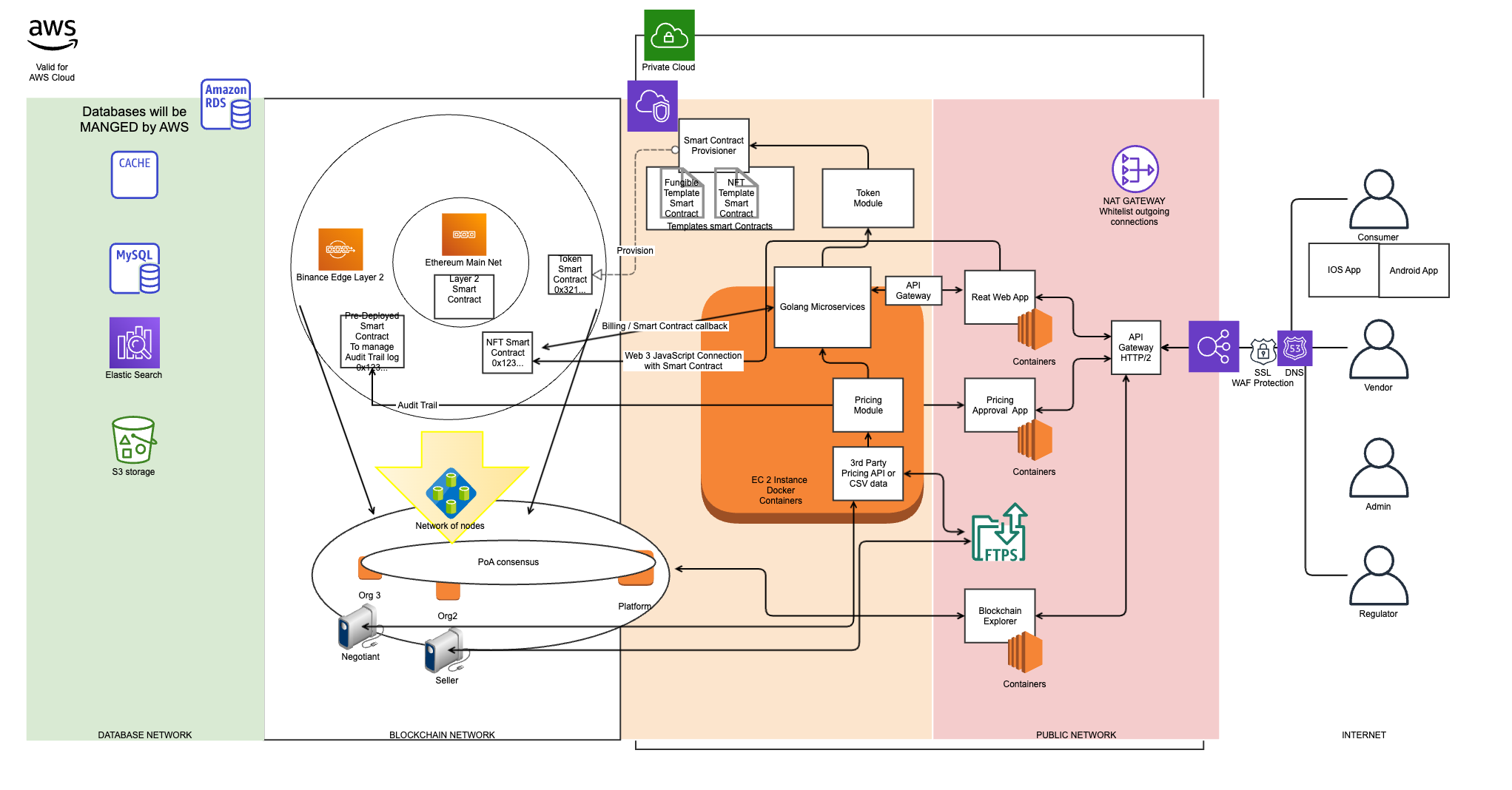
Blockchain - The Architecture of Asset Tokenization
Intro Asset tokenization has emerged as a transformative concept that revolutionizes the way we perceive and interact with traditional assets. By converting real-world assets into digital tokens, tokenization enables fractional ownership, enhances liquidity, and opens up new avenues for investment. This article provides an in-depth exploration of the architecture underlying asset tokenization platforms, elucidating the key components and their interconnections. Through this comprehensive analysis, we aim to shed light on the technological infrastructure that powers the seamless tokenization of assets and facilitates the growth of a digital ownership economy.
Read article →
Blockchain Digital Wallets: A Comprehensive Guide to Building Your Own Wallet
Intro However, while they may appear technically simple, building your own blockchain digital wallet equipped with advanced security features provides you the ultimate level of control over your funds and assets. In addition to this, as an open-source protocol, blockchain digitization continually adapts itself around customer needs. This ensures a frictionless customer experience across every transaction and storing platform. Thus blockchain technology will not lose its relevance in the world of cryptocurrencies and DeFi.
Read article →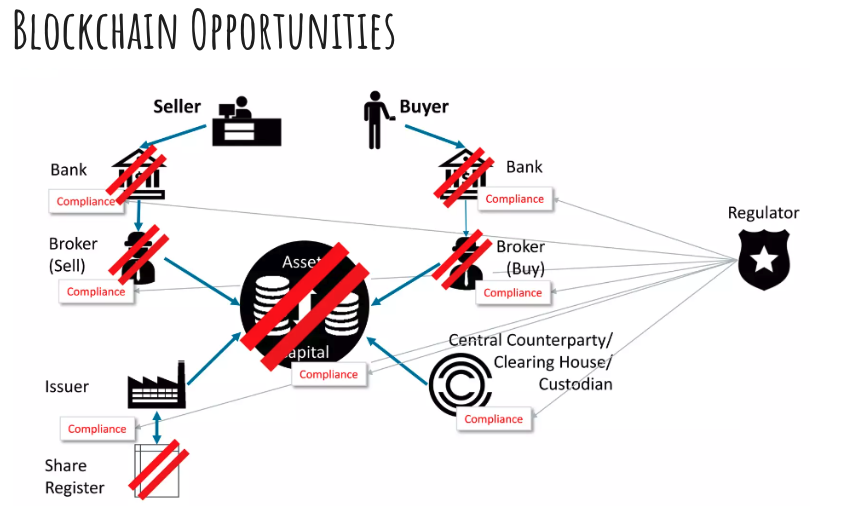
Blockchain - The Rise of Asset Tokenization
Intro Asset tokenization has become a transformational force in recent years, altering how we view and use conventional assets. This cutting-edge technology, which is supported by blockchain and smart contracts, has the ability to expand accessibility, release liquidity, and completely transform the landscape of asset ownership and investing. Asset tokenization holds the promise of democratizing investments and creating new pathways for financial inclusion for anything from real estate and fine art to equities and commodities. We will go further into the world of asset tokenization in this extensive post, examining its definition, advantages, difficulties, and potential future.
Read article →
Programming with ChatGPT: A new era of AI-assisted development
Intro ChatGPT, a language model developed by OpenAI, has revolutionized the way we think about programming and software development. With its advanced natural language processing capabilities, ChatGPT has the potential to significantly improve the efficiency and accuracy of programming tasks. One of the most exciting applications of ChatGPT in programming is its ability to assist developers with code generation. By analyzing code samples and understanding the developer’s intent, ChatGPT can generate new code that is both syntactically and semantically correct. This can save developers a significant amount of time and effort, and can also lead to fewer bugs and errors in the final product.
Read article →
The foreign function interface to call Rust library from Golang
Intro Imagin that you have a project written in C/C++ or even Rust and you would like to call functions from this project library in your Golang application. Wonderful thign is that there is a solution for that called FFI. A foreign function interface (FFI) is a mechanism by which a program written in one programming language can call routines or make use of services written in another. The primary function of a foreign function interface is to mate the semantics and calling conventions of one programming language (the host language, or the language which defines the FFI), with the semantics and conventions of another (the guest language). This process must also take into consideration the runtime environments and/or application binary interfaces of both. This can be done in several ways:
Read article →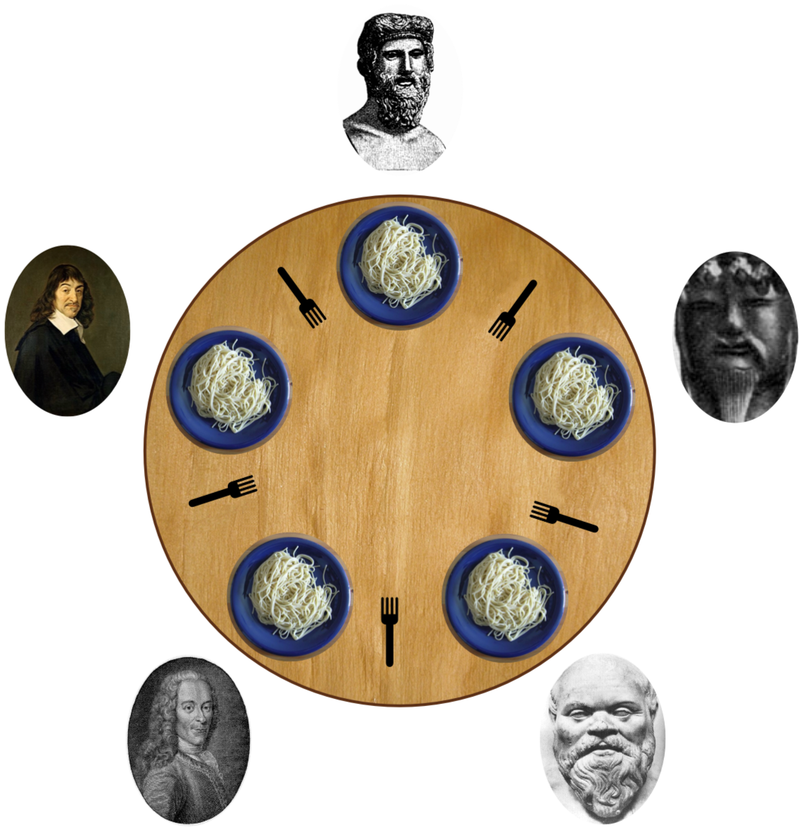
The Dining Philosophers Problem
Intro I would like to share classical problem with philosophers. This classic problem shows the various elements of parallelism. The complexity of the implementation of the task lies in the fact that a simple implementation can go into a hopeless state. The problem is defined like this: In ancient times, wealthy philanthropists invited five eminent philosophers to visit. Each of them was given a room in which they could engage in their professional activity—thinking. There was also a common dining room, where there was a large round table, and five chairs around it. Each chair had a plaque with the name of the philosopher who was supposed to sit on it. To the left of each philosopher was a golden fork, and in the center of the table was a large bowl of spaghetti, which was constantly replenished. As befits philosophers, they spent most of their time in thought. But one day they felt hungry and went to the dining room. Everyone sat down on their chair, took a fork and stuck it into the bowl of spaghetti. But the nature of tangled spaghetti is such that a second fork is needed to push the spaghetti into the mouth. That is, the philosopher also needed a fork to his right. The philosophers put down their forks and got up from the table, continuing to think. After all, the fork can only be used by one philosopher at a time. If another philosopher wants to take it, then he will have to wait until she is released.
Read article →